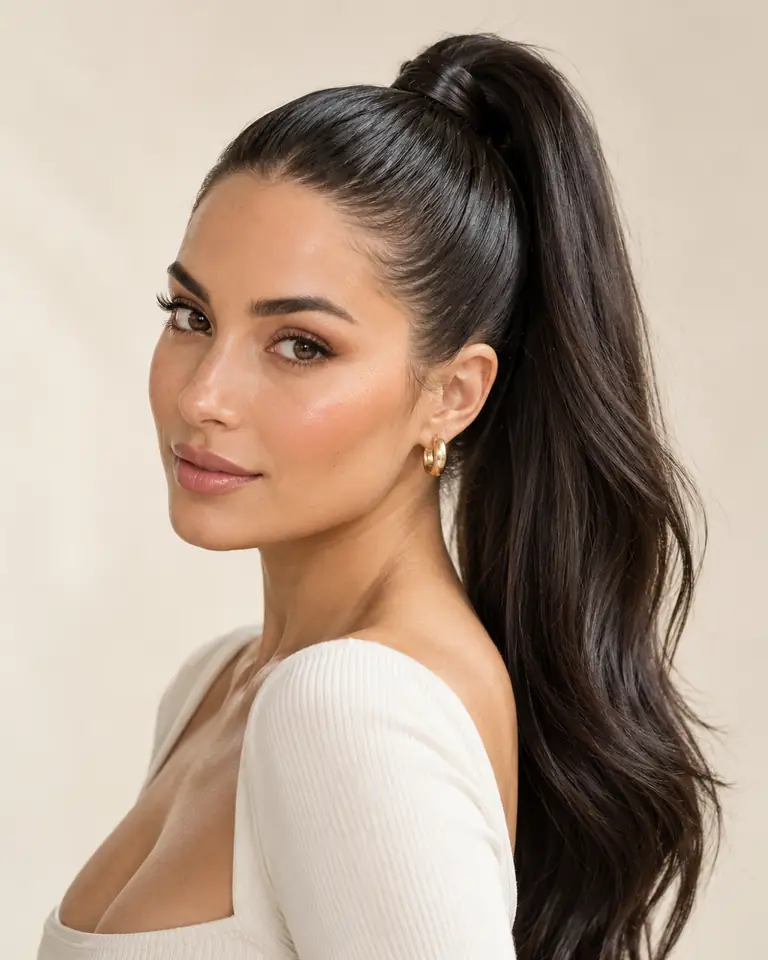
A sleek ponytail looks simple, but its success depends on preparation, placement, and tension. The best version smooths the surface while respecting the hairline and keeping the base comfortable.
- Start with your current texture, density, condition, and color history.
- Choose the maintenance rhythm you can realistically keep.
- Save references that show the front, side, and back whenever possible.
- Ask your stylist how the idea should be adapted rather than copied exactly.
01
High glass ponytail
A high placement and mirror-like surface create an energetic lifted finish. Build the base in sections so the crown stays smooth without excessive pulling.
Ask for: a high ponytail aligned with the cheekbone and a clean, comfortable base.
02
Low center-part ponytail
A precise center part and nape-level base feel quiet and modern. A light serum controls flyaways while leaving the lengths fluid.
Ask for: a low ponytail with a crisp center part, covered elastic, and softly moving ends.
03
Wrapped-base ponytail
A small section of hair wrapped around the elastic turns a basic ponytail into a finished style. Pin underneath so the attachment stays invisible.
Ask for: a secure ponytail with a slim polished wrap and hidden pinning under the base.
04
Sleek braided ponytail
A smooth crown flowing into one long braid combines polish with practical hold. Keep the braid firm but not tight enough to strain the scalp.
Ask for: a sleek mid-height base with one even braid and low-tension edges.
05
Bubble ponytail
Evenly spaced elastics create rounded sections down the length. Gently expand each bubble after securing it to keep the result balanced.
Ask for: a smooth base with evenly proportioned bubbles and concealed elastics.
06
Side-part low ponytail
A deep side part softens the strictness of a sleek finish. Tuck the smaller side behind the ear for a deliberate asymmetrical line.
Ask for: a deep side part leading into a low ponytail with a smooth ear tuck.
07
Sculpted wave ponytail
The crown remains sleek while the tail is set into broad waves. This contrast keeps the style elegant without looking stiff from root to end.
Ask for: a polished base with large brushed waves through the ponytail only.
08
Mid-height power ponytail
A mid-height ponytail sits between sporty and formal. It follows the head shape naturally and works well with both straight and softly curled ends.
Ask for: a mid-height ponytail with firm support, wrapped base, and controlled movement.
09
Twisted sleek ponytail
Two smooth side sections twist toward the base before joining the ponytail. The detail adds interest while preserving a clean silhouette.
Ask for: two polished twists feeding into a centered low ponytail.
10
Sleek curly ponytail
A smooth crown paired with a defined curly tail celebrates texture through contrast. Use flexible control at the roots rather than coating the curls.
Ask for: a sleek comfortable base with hydrated, defined curls left full in the tail.
11
Ribbon-finished ponytail
A narrow velvet or satin ribbon around the base adds a seasonal finish without changing the structure. Keep it tonal for a sophisticated result.
Ask for: a polished ponytail finished with one narrow ribbon and no competing accessories.
FAQ
Questions before you book
How should I choose between these 11 ideas?
Begin with the idea closest to your current length, texture, and color level. Then compare the maintenance notes and ask a professional which details can be adapted without compromising hair health.
Should I bring reference photos to the salon?
Yes. Bring two or three references and explain what you like in each one. Include at least one image with a texture and density similar to yours.
How do I keep the result looking fresh?
Use the care routine recommended for the service, protect hair from unnecessary heat, and schedule maintenance according to the shape or color rather than waiting for it to feel unmanageable.
Our editorial approach
Inspiration with practical context
Timeless Tresses pairs visual ideas with texture, upkeep, and salon-language notes. A qualified stylist or colorist should assess your hair in person before a major chemical or structural change.