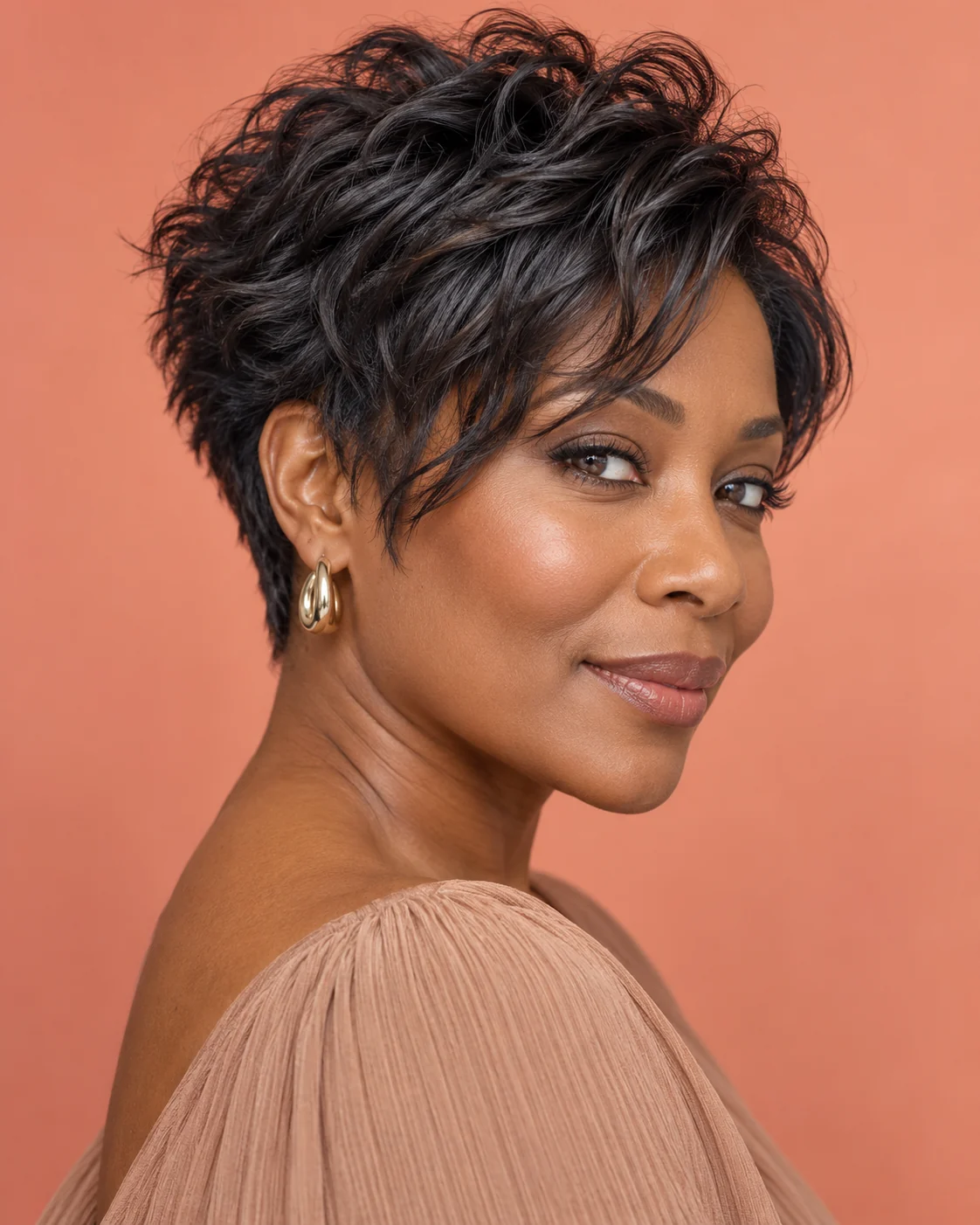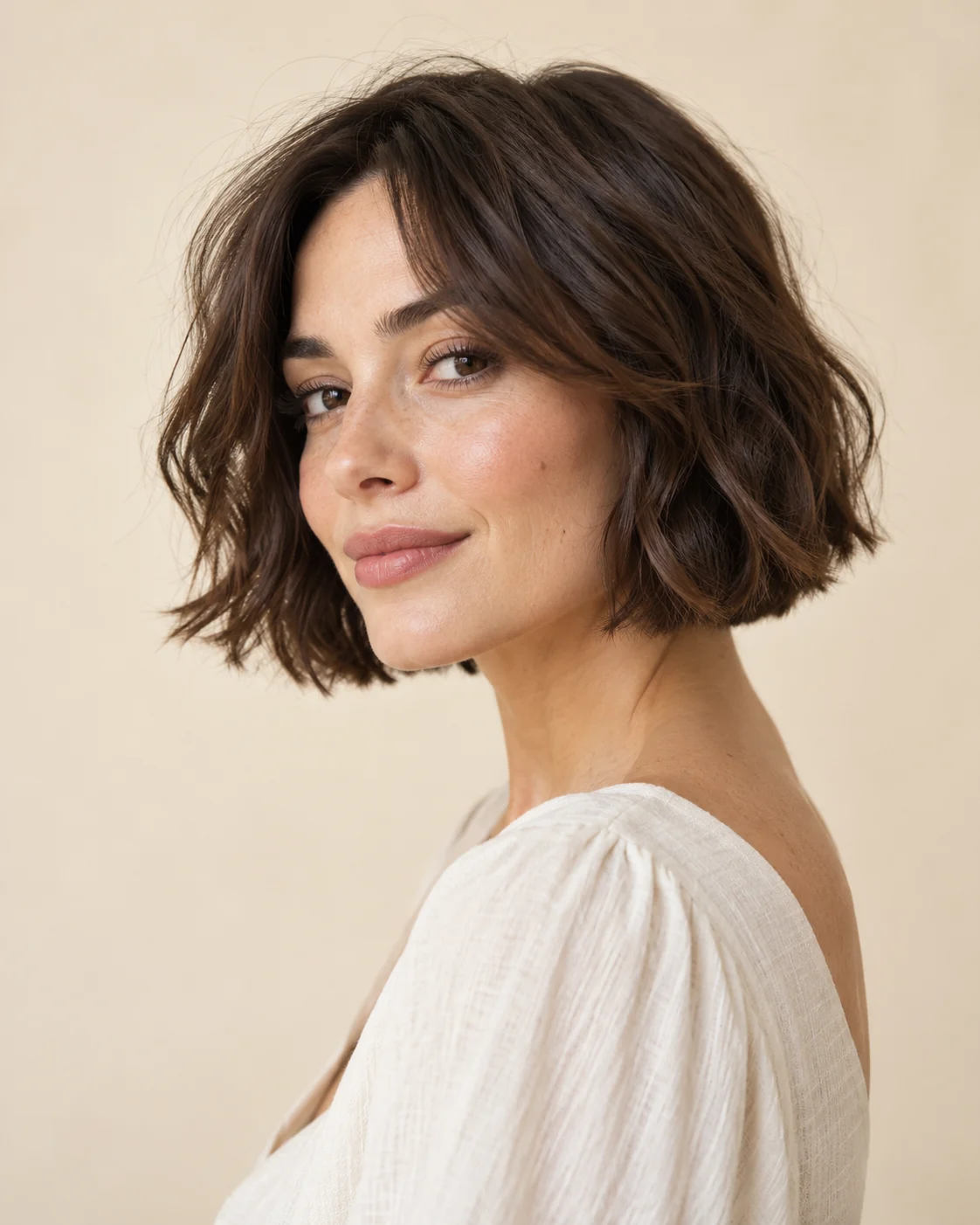
A French bob is a compact bob with a deliberate baseline - usually between the lips and chin - and an unfussy finish. Its strength is proportion, not a single mandatory fringe or texture.
- Keep the baseline full if your hair is fine.
- Add subtle internal shaping if your hair is dense.
- Choose the length while considering curl spring and shrinkage.
- Make the fringe optional; the bob shape should stand on its own.
01
What makes a bob feel “French”?
The French bob is shorter and more compact than a classic shoulder-skimming bob. It usually ends close to the jaw, is cut with a clear perimeter, and is styled with movement instead of a rigid, perfectly polished finish.
That does not mean one exact haircut works for everyone. The strongest version borrows the idea - short, confident, softly undone - then adjusts the length and weight to the person wearing it.
Think of “French” as the mood. The correct baseline and weight distribution are what make the haircut work.
02
Where should your French bob fall?
Start with the feature you want the baseline to meet. A strong horizontal line naturally draws attention to the part of the face beside it. Move that line slightly and the whole haircut reads differently.
If your hair curls or coils, agree on the finished dry length - not only where the wet hair sits. A curl-by-curl check can protect the intended silhouette.
03
Who does a French bob suit?
Face-shape rules are less useful than proportion. The haircut can be adapted for most people by changing where the line lands, how much width sits at the sides, and whether the front is blunt, curved, or softly broken.
Fine hair
Favor a solid perimeter and minimal graduation. Too many layers can make the ends look transparent.
Thick hair
Remove weight internally while preserving the outer line. This avoids a triangular shape without making the ends wispy.
Wavy hair
Let the natural bend soften the line. Ask the stylist to check balance in your usual parting.
Curly hair
Plan for shrinkage and width. Dry detailing helps the bob settle into a deliberate rounded silhouette.
04
What to ask for at the salon
Bring references that show a texture and density reasonably close to yours. Then discuss what you like about the image instead of asking your stylist to reproduce it without adjustment.
Your stylist brief
Copy, save, and personalize this
I would like a compact French bob with the dry baseline sitting at my jaw. Please keep the perimeter full, add only enough internal shaping for movement, and make sure it works with my natural texture and usual parting. I want a soft, touchable finish rather than a very rounded or heavily graduated shape. Please show me how the length will change when my hair is dry.
Three decisions to make before cutting
- Exact dry length: lip, jaw, or chin?
- Perimeter: crisp and blunt, or softly broken?
- Fringe: none, micro, brow-length, or curtain?
05
How to style it without overworking it
A French bob generally looks best when the natural texture remains visible. The goal is controlled ease rather than a perfectly beveled salon blowout every day.
- 1
Build light support
Work a lightweight leave-in or mousse through damp hair, concentrating on mid-lengths rather than the roots.
- 2
Dry for your texture
Air-dry or diffuse waves and curls. For straighter hair, direct the dryer downward while moving the hair with your hands.
- 3
Finish selectively
Add one or two bends around the face, then separate with a small amount of texture cream. Avoid coating every section.
06
Maintenance and grow-out
A short, intentional perimeter shows growth sooner than a longer layered cut. Book trims based on how precise you want the line to stay, not an inflexible rule.
07
Common mistakes to avoid
- Choosing the length only on wet hair. Texture and shrinkage can move the finished line much higher.
- Removing too much weight from fine ends. The French bob depends on a visible perimeter.
- Ignoring your everyday part. A centered reference may balance differently if you always wear a deep side part.
- Adding a fringe by default. A fringe can be beautiful, but it creates its own styling and trim schedule.
08
French bob FAQs
Is a French bob high-maintenance?
The daily styling can be simple, but the short baseline needs trims every six to eight weeks if you want to preserve its compact shape.
Can I wear one without bangs?
Yes. The defining feature is the short, intentional bob shape - not the fringe. A clean center part, side part, or face-framing pieces can all work.
Will it work with naturally curly hair?
Yes, when the length accounts for shrinkage and the weight is balanced for your curl pattern. A dry check is especially helpful.
What if I want to grow it out?
Let it become a chin-length bob, then a collarbone bob. Small perimeter cleanups can keep the grow-out deliberate without returning to the original short length.