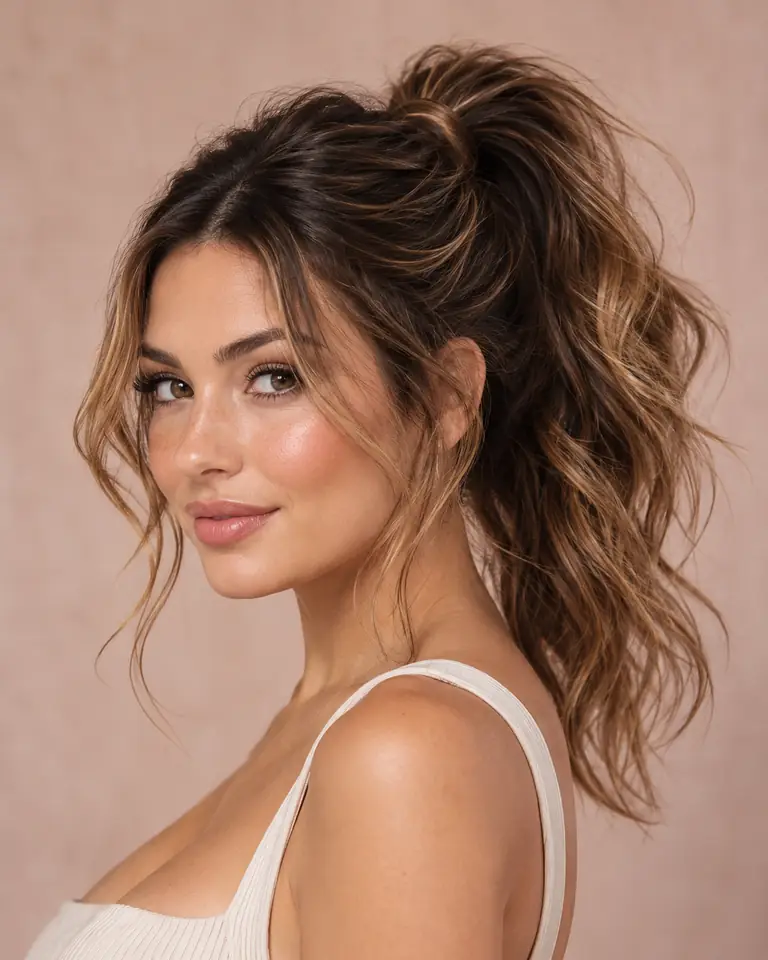
Today’s ponytails are less about one perfect finish and more about intentional texture. A ponytail can be airy, braided, curled, sculpted, or softly undone as long as the base feels secure and the proportions are balanced.
- Start with your current texture, density, condition, and color history.
- Choose the maintenance rhythm you can realistically keep.
- Save references that show the front, side, and back whenever possible.
- Ask your stylist how the idea should be adapted rather than copied exactly.
01
Bouncy supermodel ponytail
Lift at the crown and a curled tail create a soft glamorous silhouette. Use two stacked elastics for support without pulling the hairline.
Ask for: a lifted crown, secure mid-high base, and large brushed curls.
02
Braided crown ponytail
A slim braid travels along the hairline before joining the ponytail. It adds detail where it is most visible while keeping the length free.
Ask for: one clean crown braid blended into a textured ponytail.
03
Claw-clip ponytail hybrid
A large clip folds the ponytail upward and lets the ends spill over. The shape feels casual but more intentional than a quick twist.
Ask for: a secure claw-clip fold with balanced ends and no scalp strain.
04
Rope-twist ponytail
Twisting two sections around each other creates a sleek dimensional tail. A small amount of styling cream helps the pattern remain visible.
Ask for: a smooth base with an even two-strand rope twist to the ends.
05
Curly pineapple ponytail
A high loose base lets curls fall forward while preserving volume. Use a soft scrunchie and avoid tightening the hairline.
Ask for: a high loose pineapple with protected edges and separated curls.
06
Half-braided ponytail
Braid only the upper half of the tail, then leave the ends loose. The change in texture makes a familiar style look editorial.
Ask for: a clean braid that releases into soft loose ends at mid-length.
07
Bow ponytail
A structured fabric bow adds impact at the base and can make a simple ponytail event-ready. Keep the hair finish restrained so the accessory remains focal.
Ask for: a centered ponytail with one proportionate bow and polished ends.
08
Double ponytail volume trick
Two ponytails stacked vertically create the illusion of more length and density. Blend the top section over the lower elastic so the trick disappears.
Ask for: two aligned bases concealed beneath one continuous-looking ponytail.
09
Face-framing tendril ponytail
Two soft front pieces make a ponytail feel relaxed and flattering. Choose their length deliberately instead of pulling out random strands.
Ask for: a secure textured ponytail with two intentional face-framing pieces.
10
Sectioned braided ponytail
Small braids feed into a larger ponytail for a protective, dimensional finish. Keep the parting clean and the tension comfortable.
Ask for: low-tension feed-in braids gathered into a full ponytail.
11
Wet-look low ponytail
Glossy roots and a low base create a fashion-forward finish. Apply product in thin layers so the hair looks polished rather than heavy.
Ask for: a controlled wet-look surface with a compact low base and clean ends.
FAQ
Questions before you book
How should I choose between these 11 ideas?
Begin with the idea closest to your current length, texture, and color level. Then compare the maintenance notes and ask a professional which details can be adapted without compromising hair health.
Should I bring reference photos to the salon?
Yes. Bring two or three references and explain what you like in each one. Include at least one image with a texture and density similar to yours.
How do I keep the result looking fresh?
Use the care routine recommended for the service, protect hair from unnecessary heat, and schedule maintenance according to the shape or color rather than waiting for it to feel unmanageable.
Our editorial approach
Inspiration with practical context
Timeless Tresses pairs visual ideas with texture, upkeep, and salon-language notes. A qualified stylist or colorist should assess your hair in person before a major chemical or structural change.